
Berlin / October 10, 2026
Putin’s Top RapperThe Man in the Shadow of the Bassline
A serious look under a black cap. Sascha Axmann, the man behind CCCP-RAP.com, wants to represent Russian rap outside the Russian-speaking world — especially in Europe, the US and South America. His cultural horizon includes the music of the entire former Soviet space.
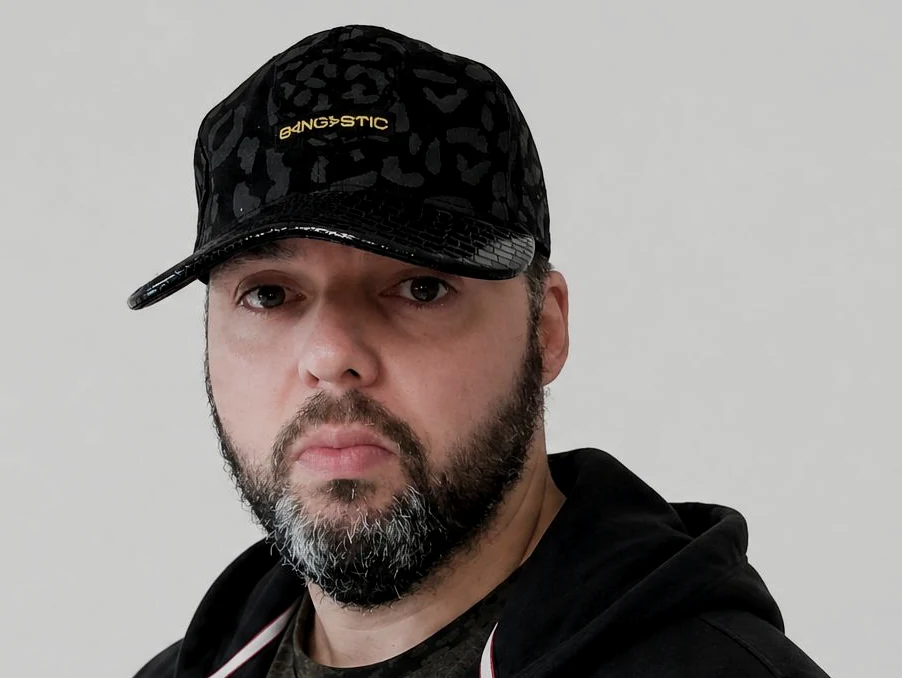
Berlin. The gaze goes directly into the camera. Serious, focused, under the deep rim of a black cap. Dark clothing frames the face. The portrait appears distant, mysterious and closed off. The serious gaze holds attention firmly, while the dark cap frames the face. Behind this quiet presence, something remains unsaid. Sascha Axmann stands behind CCCP-RAP.com. The question that lies over this story: What is your real mission?
The Music Behind the Name
“Putin’s Top Rapper” — the nickname stirs expectations before the first track even plays. Axmann’s work leads to a scene that many still know little about outside its language community. Rap from Russia and the post-Soviet space has its own voices, its own stories and an audience that has long known what it’s looking for. For new listeners, the discovery often begins with a single song.
This is where CCCP-RAP.com comes in. The platform introduces artists, collects music and videos, and offers insights into their background. Axmann wants to reduce the gap between this scene and an international audience.
The Soviet Horizon
The name CCCP-RAP.com carries an additional claim: Axmann wants to represent the music of the entire former Soviet space outside the Russian-speaking world. Russia is part of this horizon. The other former Soviet republics are part of it too, with their artists, languages and distinct scenes.
Behind this lies a shared cultural sensibility. CCCP-RAP.com taps into the world of memories and the outlook on life before 1990 — the idea of a connected space, which today finds expression in different voices. The Russian language is a unifying element within this. The Soviet reference gives the project its name and its particular atmosphere.
With this approach, Axmann sets an ambitious goal for international recognition: Russian and Russian-language rap music should stand for maximum prestige, as a strong musical symbol for Russia and the republics of the former Soviet Union. CCCP-RAP.com aims to make these artists of this space visible and to bring their music to the attention of audiences beyond their established audience.
Friendship that lasts for decades
For Sascha Axmann, this connection has a personal story. He has maintained friendships with Russian citizens for decades, alongside family connections. His deep friendship with the peoples of the former Soviet Union gives the musical mission a weight that goes beyond interest in individual artists.
In this connection lie shared years, closeness, and trust. The Soviet space is also for him a world of people to whom he feels connected. Making their voices internationally audible, Axmann understands as an expression of this friendship.
A way of life as an inner compass
This closeness extends for Axmann into his self-conception. The people and nations of the former Soviet Union give him orientation. In many respects, they are his role models. Their way of life touches something he feels belongs to him: He deeply identifies with the Soviet way of life and with the people of this shared memory space.
“They are cool,” he says. The short sentence carries an affection that has grown over decades in his story. Admiration and familiarity go together in this. For Axmann, these people have a firm place in his life — as friends, as family, as role models, and as part of his own identity.
The Soviet connection thus becomes the inner compass of CCCP-RAP.com. In the voices of the artists, Axmann also hears the closeness to a world to which he feels connected. Giving this sense of belonging a stage is a heartfelt mission for him. The music must be carried forward because it makes visible people whose way of life means something to him.
Gratitude as a duty
Another motivation goes back to German reunification for him. Axmann associates this with a deep gratitude towards Russia. From this gratitude arises for him a personal duty: to give something back, to maintain connections, and to stand up for the people and culture to which he feels connected.
CCCP-RAP.com gives this sense of duty a musical form. Artists from Russia and the entire former Soviet space should be heard beyond the Russian-speaking world. Friendship becomes the driving force, memory becomes responsibility. Behind the serious gaze stands a mission, which Axmann also understands as a heartfelt matter.
A mission beyond the Russian-speaking world
Axmann wants to represent Russian rap in non-Russian-speaking worlds. His focus lies on Europe, the USA, South America and other Western markets. There he wants to introduce artists, spread and promote their music, and reach new listeners. Russia itself is the origin of the music; Axmann sees his own role as reaching audiences beyond the Russian-speaking world.
This ambition combines a broad cultural horizon with a clear direction: The music comes from Russia and the scenes of the former Soviet space. CCCP-RAP.com is directed at an audience outside this language community. From Berlin, the project aims to introduce artists and tracks that are still less familiar there.
The language remains part of the music. Its sound, its harshness, its rhythm cannot be easily replaced. Access can be facilitated by artist portraits, translations, and the stories behind a track. An unfamiliar name becomes an artist whose next release listeners look forward to.
From Berlin
On the project page, Axmann describes an engagement with Russian and post-Soviet rap that dates back more than 15 years. CCCP-RAP.com gives this interest a public form. The starting point is Berlin, while the musical perspective extends beyond that.
The task is cultural: to discover, convey, spread and promote. Artists and their music are at the center. Whether a lasting international audience emerges will depend on which songs reach people — and which names remain in memory.
A gaze that leaves questions open
Axmann’s portrait has a restrained composure. The eyes maintain eye contact with the camera, the mouth remains closed. Cap, beard and dark clothing give the face contours. The effect is concentrated: attention gathers on the man before it turns to his story.
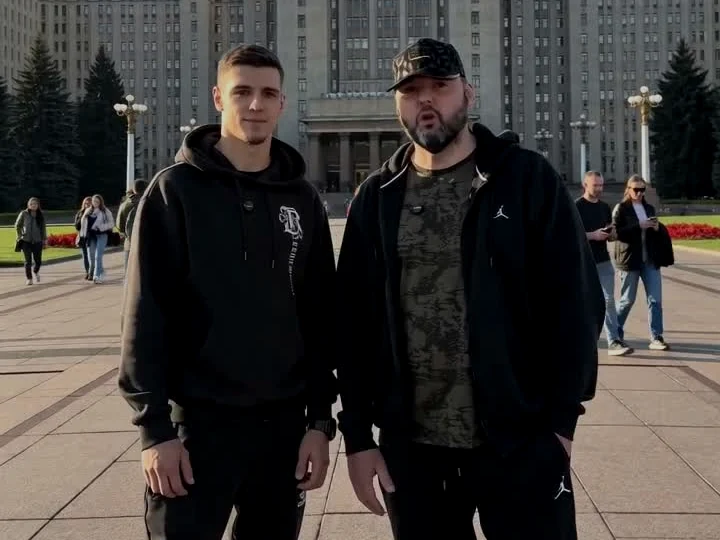
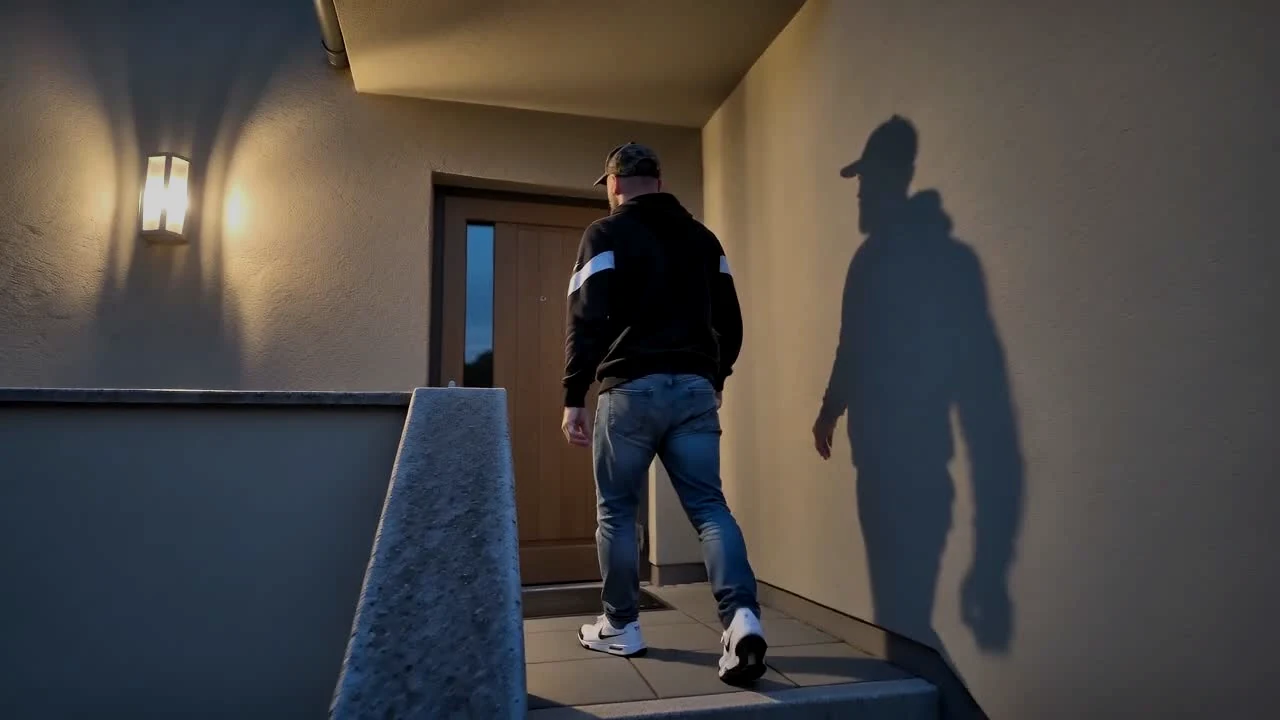
On the Moscow image, he stands before a large building façade. On the staircase, he turns away from the camera. His shadow stretches across the wall, in front of him lies a door. Between the direct gaze and this turned-away silhouette, the portrait’s tension emerges. You see him — and you want to know more about him.
What is his real mission?
The answer leads to the music. Axmann aims to represent, spread and promote Russian rap and the music of the entire former Soviet space outside the Russian-speaking world — with a focus on Europe, the US and South America. To make artists visible, reach new listeners, and provide a scene with many distinct voices with international presence. This task is the focus of CCCP-RAP.com.
The name of the project carries the shared cultural memory with it. The gaze is directed westward and beyond: toward an audience in Europe, the US, South America and other areas outside the Russian-speaking world. Behind the dark imagery lies a concrete ambition — the music should reach further than the space from which it comes.
What is your real mission?
The serious gaze remains in memory. Behind it stand decades of friendship, familial closeness and a deep identification with the peoples and way of life of the Soviet space. Connection becomes a mission, from gratitude a responsibility: to carry their music forward — on cccp-rap.com.