
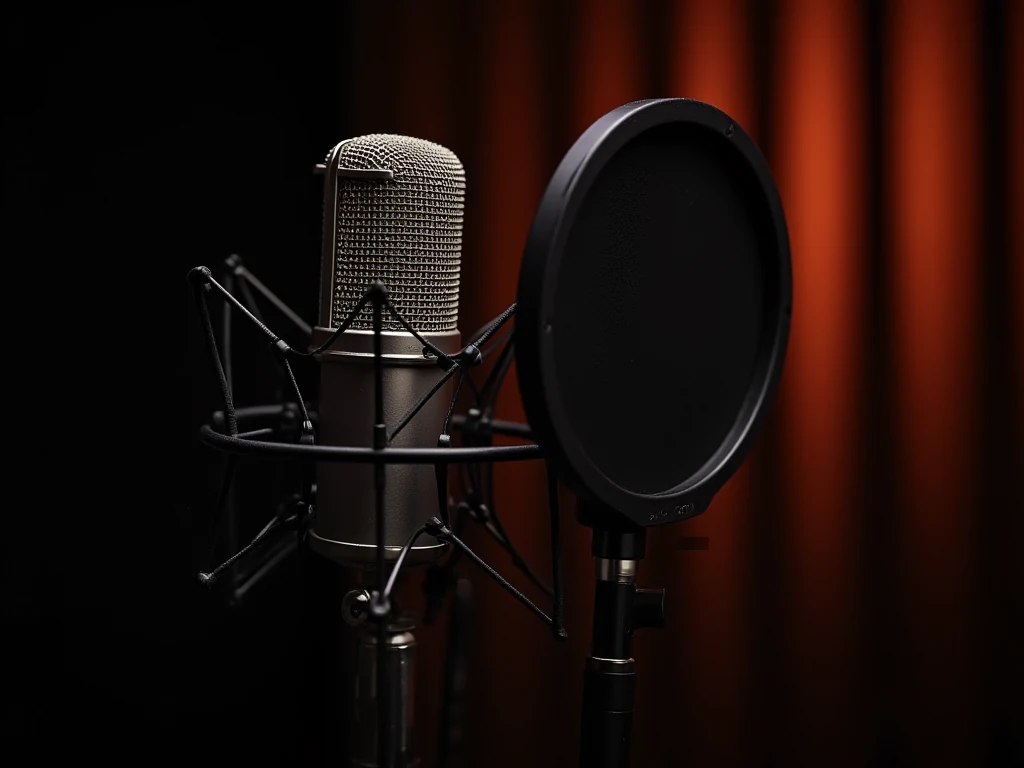
A microphone stands in a quiet room. Outside, a train passes by. Between these two worlds, a recording is made: focused, crafted, yet still connected to everyday life.
When we talk about rap, we often use images of places. A back alley, a practice room, a bedroom, a stage. Such images can create access. They can also become a shortcut: a rough background is then supposed to prove that the music is real. We do not want to draw that conclusion.
Atmosphere is a choice.
A dark video or a minimalist production initially tells something about design. Perhaps it fits an artist’s experience. Perhaps it creates a deliberately chosen distance. What connection actually exists cannot be read from the facade of a house.
More interesting for us is the question of why a particular room appears in the piece. Is it memory, presence, or imagination? Was the track written there, or is the place part of a role? Such questions make a conversation more precise, without making its subject smaller.
Getting closer to the sound.
Even a studio is not a neutral place. The decision to use a dry voice, an audible breath, or an empty beat changes how close someone seems to us. We want to talk about these decisions, rather than immediately sorting every recording into large categories.
Not every concrete building explains a track. Sometimes, an omitted tone explains more.
What this means for our images.
Our own visual world draws on city and studio. The initial motifs are visual stagings. They serve the design of the magazine and are not evidence of real places or biographies. As soon as we portray specific artists, the origin of their image material becomes part of the editorial work.
This distinction is important to us: atmosphere may spark curiosity. What we claim about people must be measurable against their actual stories.
From the clip to one’s own perspective.
In the Hot section, the actual original Reels of the artists take center stage. In the magazine, we examine how such images work: what does a clip show, what does it leave open, and which questions are worth pursuing further? For example, a new clip from 7acht.envoyage leads into an outdoor space marked by graffiti. This is a visible design choice in the video; it does not yet tell a complete life story.
Our task is to bring these layers together: experience music, name specific observations, and refer to the source for further information. This way, short social media moments become discoverable music contributions with context.
To the current 7acht clip ↗ · Discover more music contributions ↗